
Andrew Fulton

Andrew Fulton

CHIEF EXECUTIVE OFFICER


Born in 1973, Andrew Fulton is a Chartered Mining Engineer (CEng, FIMMM) with more than 30 years’ international experience in the mining and minerals sector. He has held senior operational, technical and executive leadership roles across the UK, South Africa and a range of international mining jurisdictions, covering underground mine development, operations, project development and business transformation.


Andrew is the founder and Principal Director of Gatesbridge Ltd, an independent mining advisory and technical consultancy supporting mining and mineral development.


Previously, Andrew served as Vice President of ICL UK’s Boulby Polyhalite Mine, where he led the business through a significant operational and financial turnaround, strengthened governance and safety performance, and secured planning consent for long-term operations within the North York Moors National Park. Prior to this, he was Director of Operations for UK Coal plc and Regional General Manager with Anglo American in South Africa.


Andrew has extensive experience in mine development, operational readiness, strategic restructuring, stakeholder engagement and ESG-related governance. His advisory work has included assignments in Zambia, India, Turkey, Turkmenistan, Russia, Jordan and across the UK mining sector.


He is Immediate Past President of the Mining Association of the United Kingdom (MAUK) and currently serves on a number of industry and professional bodies. Andrew holds a Bachelor of Engineering with Honours from the University of Nottingham and completed the Advanced Management Programme at the University of Stellenbosch, South Africa.

1700s & Early 1800s

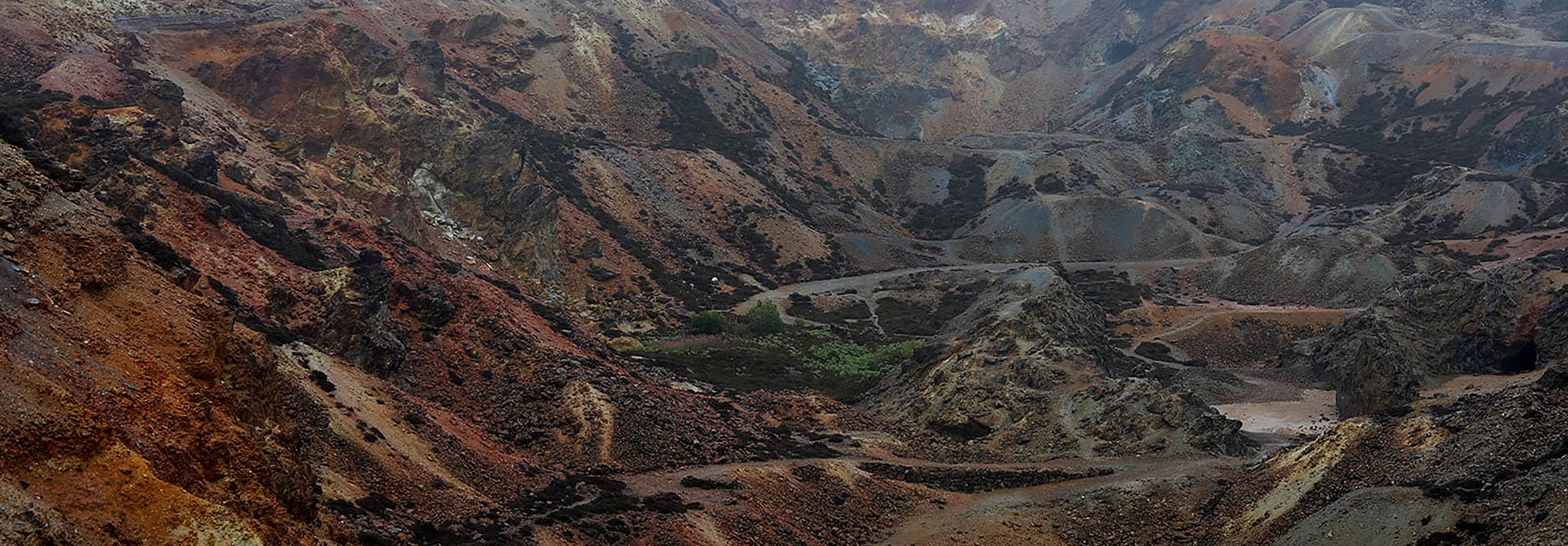
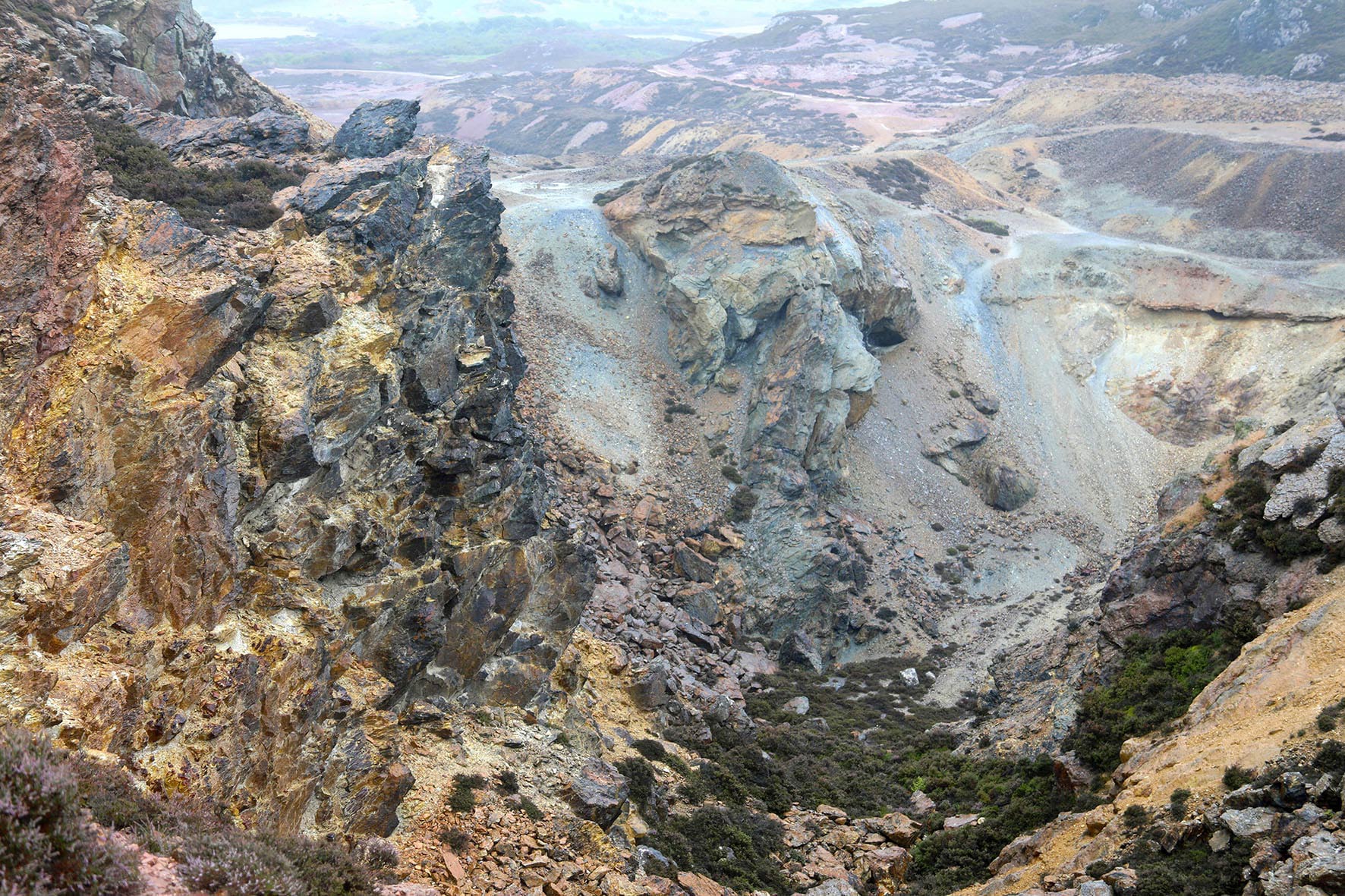
In the late 1700s and early 1800s, copper was mined from chalcopyrite-pyrite vein-like deposits utilizing an extensive series of shafts (now the collapsed open pits) and underground galleries. Although occurrences of bluestone were reported, it was not possible at that time to separate Pb and Zn from sulphide ores, so any such material that was encountered was discarded or sold for a low value. The origin of the copper veins has been long debated. Although they have been traditionally viewed as late tectonically controlled veins, partly because of the abundance of associated quartz (which forms the infamous ‘white-rock’ outcrops), it is also possible that the veins are related to the same mineralising system that produced the massive sulphides. Otherwise, one has to appeal to the ‘lightning struck twice’ hypothesis in order to account for the presence of two major mineralising systems almost side by side.


Unfortunately, there is not much information available on the geology of the old mines. However, a couple of excellent books were written in the sixties and seventies, which make interesting reading. These detail the history of mining and smelting at Parys Mountain, and its importance both to the industrial revolution and to the British economy in general. Much earlier in 1819, Michael Faraday visited the mine while taking a break from making scientific discoveries in Scotland and lucidly describes the operations in his book ‘Travels in Wales‘.


The old workings at Parys Mountain are now being explored and partly reopened though the efforts of a group of avid cavers and archaeologists led by Dr. David Jenkins of Bangor University.